President Obama Announces New Rules Today
For more than a year, advocates and government officials have been working to end the 22-year-old travel ban on people with HIV entering the United States. Today, President Obama finished the process, announcing the new rules as he signed the Ryan White HIV/AIDS Treatment Extension Act of 2009, noting, “If we want to be the global leader in combating HIV/AIDS, we need to act like it. And that’s why on Monday my administration will publish a final rule that eliminates the travel ban effective just after the New Year.”
In 1987, the US Public Health Service first issued the ban. That same year, Sen. Jesse Helms (R-N.C.) added HIV to a list of travel restrictions, approved unanimously by Congress. In 1993, Congress added the HIV ban to immigration laws, further strengthening the policy. Repeal efforts throughout the years failed until 2008 when Congress voted to end the ban and then-President Bush signed the measure.
“Transgender people, along with other vulnerable populations, are particularly at risk for HIV and AIDS. We applaud this long-overdue change in federal policy,” remarked Mara Keisling, the Executive Director for the National Center for Transgender Equality. “Our government policies should be grounded in science, not in myth. We know that travelers with HIV are not a threat to our country and there is no reason to bar them from entry.”
For more information about transgender people and HIV/AIDS, visit the Center for Excellence for Transgender HIV Prevention.
Friday, October 30, 2009
Wednesday, October 28, 2009
One Team, One Fight!
I don't get to use a lot of my old Army officer skills now that I defend democracy in a different way, but one thing that carries over is the unifying motto of, "One Team, One Fight!"
The fight for equality happens in many different ways and on many different levels. This month it seems that they are all happening at once. There are federal advancements in the form of both adminstrative action (HUD Policies) and national legislation (Hate Crimes Prevention Act). There are state-wide ballot initiatives in Washington State and Maine. And, there is a critical city-level referendum in Kalamazoo, MI.
While NCTE's mission is to advance transgender equality on the federal level, we belong to the national movement for LGBT rights and encourage everyone to support these important state and local campaigns. Election day for them is only one week away. Please contribute as much of your time and resources as you can. Working together, we'll advance equality for all of us. "One team, one fight!"



The fight for equality happens in many different ways and on many different levels. This month it seems that they are all happening at once. There are federal advancements in the form of both adminstrative action (HUD Policies) and national legislation (Hate Crimes Prevention Act). There are state-wide ballot initiatives in Washington State and Maine. And, there is a critical city-level referendum in Kalamazoo, MI.
While NCTE's mission is to advance transgender equality on the federal level, we belong to the national movement for LGBT rights and encourage everyone to support these important state and local campaigns. Election day for them is only one week away. Please contribute as much of your time and resources as you can. Working together, we'll advance equality for all of us. "One team, one fight!"
Washington:
Who we are: Approve Referendum 71 is the campaign to preserve domestic partnerships in Washington State. By voting to approve, voters retain the domestic partnership laws that were passed during this year's legislative session, including using sick leave to care for a partner, adoption rights, insurance rights, and more.
What we need: We need phone bankers to get our supporters out to vote. Washington is an all mail-in ballot state, and we need to ensure our supporters put their ballots in the mail. Also, youth turnout is a critical component of our campaign, and youth turnout historically drops in off-year elections. So we need a lot of help to turn them out.
How you do it: Sign up here to make remote calls for Approve 71. We'll then contact you for a training, and you can make GOTV calls.
Maine:
Who we are: The No On 1/Protect Maine Equality campaign is working to protect Maine's recently-passed law legalizing marriage equality for same-sex couples. Our opponents have put the issue on the ballot for Nov 3, 2009. Because of Maine's early voting election laws, people are already voting at the polls, so we need help immediately to turn out our side at the polls.
What we need: We need you to devote a few hours to Call for Equality. Call for Equality is a virtual phonebank set up so that you can call Maine voters wherever you are. Much of Maine is rural, where canvassing isn't effective, so we need to reach these voters- along with other supporters- by phone. All you need is a phone and internet connection. No experience required! We'll provide the training, and all you need is a a few hours to help get a win in Maine.
How you do it: Click here to sign up for a training and your shift. There are lots of times available for your convenience.
Kalamazoo, MI:
Who We Are: The Yes on Ordinance 1856 / One Kalamazoo campaign is working in Michigan to support the City Commission of Kalamazoo's twice approved ordinance for housing, employment, and public accommodation protections for gay and transgender residents. Opponents forced a public referendum on the ordinance so dedicated local volunteers, led by former Stonewall Democrats Executive Director Jon Hoadley, are working to ensure voters say YES to fairness and equality and keep Ordinance 1856.
Why The Urgency: In the final weeks, the opposition has gone all out with aggressive disinformation and misleading red herrings to try to defeat the ordinance. This includes signs that say "No to Discrimination" (even though voting No actually supports continued discrimination of GLBT residents), transphobic door hangers and fliers, and now radio ads that falsely suggest that criminal behavior will become legal when this simply isn't true. The Yes on Ordinance 1856 supporters are better organized but many voters who want to vote for gay and transgender people are getting confused by the opposition.
How To Help:
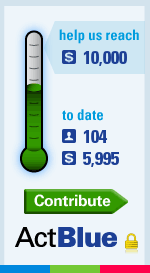
1) Help the One Kalamazoo campaign raise a final $10,000 specifically dedicated to fight back against the lies on the local TV and radio airwaves and fully fund the campaign's final field and GOTV efforts.
Give here: http://www.actblue.com/page/3-2-1-countdown
2) If you live nearby and can physically volunteer in Kalamazoo sign up here. If you know anyone that lives in Kalamazoo, use the One Kalamazoo campaign's online canvass tool to remind those voters that they need to vote on November 3rd and vote YES on Ordinance 1856 to support equality for gay and transgender people.
Contact voters: http://www.onekalamazoo.com/tellfriends2

Hate Crimes Bill Becomes a Law Today with President's Signature
Today, the Matthew Shepard and James Byrd Jr. Hate Crimes Prevention Act will become the first federal law to protect transgender people with President Barack Obama’s signature. NCTE’s Executive Director, Mara Keisling commented on NPR this morning, "It's the first time that transgender people will be in federal code in a positive way. That's a really important historical moment for the country—certainly for transgender people, but really also for the country," she says. Mara will be present at the White House to commemorate this historic moment this afternoon.
Here’s how you can participate:
- We’ll be bringing you news along the way as this historic day unfolds. Follow us @MaraKeisling and @TransEquality on Twitter for up to the minute happening.
- Join us tonight for a conference call about what the hate crime bill passage means, with an update on today’s events and what legislation is next as we move forward.The call is free, but please register so we can reserve a space for you. The call is at 8 pm ET / 7 pm CT / 6 pm MT / 5 pm PT.
- Click here to listen to NPR’s story on today’s developments.
This new law will add sexual orientation, gender identity, gender and disability to the categories included in existing federal hate crimes law and will allow local governments who are unable or unwilling to address hate crimes to receive assistance from the federal government. President Obama will sign the bill into law today.
Thursday, October 22, 2009
VICTORIES: Hate Crimes and Housing
The Senate, by a to vote, just passed the Defense Authorization Act, which includes the The Matthew Shepard and James Byrd, Jr. Hate Crimes Prevention Act, by a vote of 68 to 29. The bill now moves to President Obama's desk for his signature. Once signed, this will be the first federal law to protect transgender people. This bill marks the first positive mention of transgender people in federal law. Read NCTE's statement on the hate crimes bill.
Yesterday, the Department of Housing and Urban Development (HUD) announced proposed policies and a study that would address discrimination based on sexual orientation and gender identity. Read NCTE's statement on HUD's announcement.
Yesterday, the Department of Housing and Urban Development (HUD) announced proposed policies and a study that would address discrimination based on sexual orientation and gender identity. Read NCTE's statement on HUD's announcement.
N.Y. Court Slams Doctor’s Note Requirement for Name Change
A New York appeals court yesterday issued a two-page ruling overturning a lower court’s requirement that a transgender man present medical documentation supporting his petition for a name change. The NYC-based Transgender Legal Defense and Education Fund, which represented the petitioner, said in its press release:
[T]he appellate court wrote, "[t]here is no sound basis in law or policy to engraft upon the statutory provisions an additional requirement that a transgendered-petitioner present medical substantiation for the desired name change." The court's decision sends a powerful message that transgender people must be treated equally and that they cannot be subjected to different legal requirements than everyone else. People’s names are fundamental to their identities. This decision confirms that each one of us has the right to be known by a name we choose. That decision can’t be second-guessed by doctors, therapists or anyone else simply because someone is transgender.
Upon learning of the ruling, Olin [Winn-Ritzenberg, the petitioner,] said, "This means that I can finally change my name and move forward with my life. My gender transition has been a very personal journey, and no one is in a better position to decide that I need to change my name than I am."
…
It’s well settled in law around the country that transgender folks can follow the same simple procedures for name change as individuals who are changing their names because of marriage, religious conversion, or for any other reason. Yet, around the country, judges periodically try to make it harder for trans people than for anyone else. Despite numerous prior New York court decisions supporting the right of transgender individuals to change names without meeting any special requirements, this particular lower court had been imposing the “doctor’s note” requirement routinely on transgender individuals. While most individuals were able to comply, TLDEF appealed in this case to get rid of this requirement once and for all. Kudos to them, and to the numerous other lawyers who assisted in this appeal, including Lambda Legal.
The terse decision concludes with the unnecessary statement, which has somehow become boilerplate for New York courts, that the grant of a name change is not legal proof of change of gender.
Wednesday, October 14, 2009
Uruguay passes landmark gender identity law
Uruguay’s legislature Monday finalized legislation that will guarantee transgender people’s right to legal recognition of their gender identity based on the reality of their life in society as a man or woman. The legislation, based on similar laws adopted in the United Kingdom in 2004 and in Spain in 2007, is the most progressive of any Latin American nation. Following final approval by the Uruguayan House and Senate, the bill now goes to President Tabaré Vázquez for his signature.
The legislation begins with the statement that “Everyone has the right to free development of his personality according to his own gender identity, regardless of their gender is biological, genetic, anatomical, morphological, hormonal, or other assignment.” An individual will have the right to change his or her sex in the civil registry based upon the “stability and persistence” of gender dysphoria for at least two years. The bill calls for an interdisciplinary expert team, similar to the UK Gender Recognition Panel, to be set up by the government to evaluate applications for civil sex change. Once the civil register has been amended, an applicant is considered to be his or her new gender for all legal and administrative purposes. (A full English translation is not yet available; this description is based on the Spanish version on the Parliament's website.)
In addition to an applicant’s own testimony, the team may consider the testimony of the individual’s health care providers and “people who know the daily lifestyle of the applicant.” However, the law does not require medical evidence be submitted, and “under no circumstances” is proof of surgery to be required. This is similar to the UK law. By contrast, Spain requires proof of some form of medical treatment for a two-year period, except in cases of old age or illness.
Unlike laws in several other countries, Uruguay’s legislation does not require that applicants be childless or unmarried, or that married applicants divorce. The law states only that it does not change existing laws regarding marriage – a concession to conservatives who wanted it made clear that this law does not establish same-sex marriage. Another unusual provision requires a five-year wait in the rare case of an individual wishing to return his or her civil sex to the birth sex.
This is not the first groundbreaking stride in LGBT rights for the South American nation, which lies just south of Brazil. President Vázquez’s Broad Front coalition made Latin American history in 2007 by passing civil union legislation. Earlier this year, legislation guaranteed same-sex couples the right to adopt. The senator who introduced the civil union law has promised that if the Broad Front prevails in national elections later this month, legislation establishing marriage equality will be introduced next year.
The legislation begins with the statement that “Everyone has the right to free development of his personality according to his own gender identity, regardless of their gender is biological, genetic, anatomical, morphological, hormonal, or other assignment.” An individual will have the right to change his or her sex in the civil registry based upon the “stability and persistence” of gender dysphoria for at least two years. The bill calls for an interdisciplinary expert team, similar to the UK Gender Recognition Panel, to be set up by the government to evaluate applications for civil sex change. Once the civil register has been amended, an applicant is considered to be his or her new gender for all legal and administrative purposes. (A full English translation is not yet available; this description is based on the Spanish version on the Parliament's website.)
In addition to an applicant’s own testimony, the team may consider the testimony of the individual’s health care providers and “people who know the daily lifestyle of the applicant.” However, the law does not require medical evidence be submitted, and “under no circumstances” is proof of surgery to be required. This is similar to the UK law. By contrast, Spain requires proof of some form of medical treatment for a two-year period, except in cases of old age or illness.
Unlike laws in several other countries, Uruguay’s legislation does not require that applicants be childless or unmarried, or that married applicants divorce. The law states only that it does not change existing laws regarding marriage – a concession to conservatives who wanted it made clear that this law does not establish same-sex marriage. Another unusual provision requires a five-year wait in the rare case of an individual wishing to return his or her civil sex to the birth sex.
This is not the first groundbreaking stride in LGBT rights for the South American nation, which lies just south of Brazil. President Vázquez’s Broad Front coalition made Latin American history in 2007 by passing civil union legislation. Earlier this year, legislation guaranteed same-sex couples the right to adopt. The senator who introduced the civil union law has promised that if the Broad Front prevails in national elections later this month, legislation establishing marriage equality will be introduced next year.
Friday, October 09, 2009
Hate crimes update
The House of Representatives yesterday approved the Department of Defense Authorization Bill, which includes the gender-identity inclusive hate crimes bill, by a vote of 281-146. Expect the measure in the Senate very soon, and then it will head on to the President's desk.
Thursday, October 08, 2009
Breaking news: Hate Crimes Bill Moves Forward
The House of Representatives is voting today to accept the Department of Defense Authorization Conference Report, including the hate crimes provisions, now called The Matthew Shepard and James Byrd, Jr. Hate Crimes Prevention Act. The bill had been being worked on by a conference committee, which reconciles the different House and Senate versions, so that a final vote can be taken on a unified bill. This vital legislation adds gender identity, sexual orientation, gender and disability to the categories covered in federal hate crimes laws.
This bill is truly historic for the transgender community as it marks the first federal protections to include gender identity. It will also provide necessary tools to educate law enforcement about the hate-motivated violence that we face and the need to both prevent and address it. In addition, resources and expertise from the federal government will be available to jurisdictions that aren’t able to, or aren’t willing to, investigate bias crimes against transgender people. Finally, it sends a clear message that violence is never an acceptable to response to differences.
You may recall that the Senate version included a death penalty provision—added by conservatives hoping to make the bill unpalatable to liberals. Fortunately, this has been removed in conference committee so will not be part of the final bill.
President Obama has already indicated that he will sign the bill once it is passed by both the House and Senate. Since both chambers have already voted positively on the bill, it is expected to pass and move forward very shortly. Watch for more details as these exciting events unfold and we take concrete steps to address the violence that we face.
This bill is truly historic for the transgender community as it marks the first federal protections to include gender identity. It will also provide necessary tools to educate law enforcement about the hate-motivated violence that we face and the need to both prevent and address it. In addition, resources and expertise from the federal government will be available to jurisdictions that aren’t able to, or aren’t willing to, investigate bias crimes against transgender people. Finally, it sends a clear message that violence is never an acceptable to response to differences.
You may recall that the Senate version included a death penalty provision—added by conservatives hoping to make the bill unpalatable to liberals. Fortunately, this has been removed in conference committee so will not be part of the final bill.
President Obama has already indicated that he will sign the bill once it is passed by both the House and Senate. Since both chambers have already voted positively on the bill, it is expected to pass and move forward very shortly. Watch for more details as these exciting events unfold and we take concrete steps to address the violence that we face.
Friday, October 02, 2009
Ohio Protects Drivers’ Safety and Privacy
The Ohio Bureau of Motor Vehicles last week rolled out an updated policy on changing gender designations on driver’s licenses. This policy will make it easier for many residents of the Buckeye State to seek employment, open a bank accounts and post office boxes, travel and conduct other business while protecting their privacy and safety. It will also assist law enforcement and other  government agencies by ensuring that this most common form of identification reflects how individuals live their daily lives.
Under the new policy, Ohio drivers can obtain an updated license by filling out, along with the medical or mental health provider, a simple form verifying that they are receiving care for gender transition in accord with established standards of care. Ohio’s policy reflects the current trend in motor vehicle agencies across the country, and is similar to existing policies in the District of Columbia, California, Colorado, Massachusetts, New Jersey and several other states. While the new Ohio form is not yet available online, more information is available via TransOhio. If you are interested in improving driver’s license policies in your state, please contact NCTE@NCTEquality.org.
government agencies by ensuring that this most common form of identification reflects how individuals live their daily lives.
Under the new policy, Ohio drivers can obtain an updated license by filling out, along with the medical or mental health provider, a simple form verifying that they are receiving care for gender transition in accord with established standards of care. Ohio’s policy reflects the current trend in motor vehicle agencies across the country, and is similar to existing policies in the District of Columbia, California, Colorado, Massachusetts, New Jersey and several other states. While the new Ohio form is not yet available online, more information is available via TransOhio. If you are interested in improving driver’s license policies in your state, please contact NCTE@NCTEquality.org.
Wednesday, September 30, 2009
The Disparate Impact Non-Issue
At last week’s House Education and Labor Committee hearing on ENDA, witness Camille Olsen, an attorney who represents employers, raised several questions about what she characterized as ambiguities in the bill. Among the points Olson raised was the question of “disparate impact” claims under ENDA. Olson’s technical arguments were potentially confusing even for an attorney like myself, so it’s worth trying to explain them in plain English.
Under existing employment discrimination laws, there are two types of unlawful discrimination claims. “Disparate treatment” cases are where there is evidence of intentional discrimination by the employer. Vandy Beth Glenn suffered a classic case of disparate treatment when her boss fired her for the stated reason that she was transitioning from male to female. The principle of “disparate impact” is different: an employer may not take actions that have the overall effect of excluding a group of people, unless there is a sufficient reason to do so. For example, height and weight requirements have a disparate impact on women because (even though some women would meet them) they tend, on average, to exclude more women than men. Unless an employer can demonstrate a sound reason for using these requirements, they will be deemed discriminatory.
The law of disparate impact has been a powerful tool for promoting the inclusion of women and minority groups in the workplace. Some conservatives, however, oppose it because they view it as a form of “reverse discrimination.” Justice Antonin Scalia even speculated earlier this year that disparate impact laws could be unconstitutional. Because it has become something of a political football, disparate impact would be a sticking point under any new antidiscrimination law. But as Rep. Robert Andrews pointed out at the hearing, it would be hard to think of a situation where a disparate impact claim could be brought under ENDA. (No short men or tall women? No Streisand fans need apply?) So, to avoid distracting debates on the subject, ENDA states that “Only disparate treatment claims may be brought under this Act.” That seems plenty clear to us. But Olson suggested that ENDA needs, well, added redundancy: to provide in so many words that disparate impact claims are barred, and that “disparate impact” means that same thing it does under every other law. Of course, as Acting EEOC Chair Stuart Ishimaru stated at the hearing, that’s really not needed: read in context, the bill is already crystal clear.
Like many of the other questions that have been raised about ENDA, this one is really a non-issue. We can expect to see more such non-issues raised in the weeks ahead.
Under existing employment discrimination laws, there are two types of unlawful discrimination claims. “Disparate treatment” cases are where there is evidence of intentional discrimination by the employer. Vandy Beth Glenn suffered a classic case of disparate treatment when her boss fired her for the stated reason that she was transitioning from male to female. The principle of “disparate impact” is different: an employer may not take actions that have the overall effect of excluding a group of people, unless there is a sufficient reason to do so. For example, height and weight requirements have a disparate impact on women because (even though some women would meet them) they tend, on average, to exclude more women than men. Unless an employer can demonstrate a sound reason for using these requirements, they will be deemed discriminatory.
The law of disparate impact has been a powerful tool for promoting the inclusion of women and minority groups in the workplace. Some conservatives, however, oppose it because they view it as a form of “reverse discrimination.” Justice Antonin Scalia even speculated earlier this year that disparate impact laws could be unconstitutional. Because it has become something of a political football, disparate impact would be a sticking point under any new antidiscrimination law. But as Rep. Robert Andrews pointed out at the hearing, it would be hard to think of a situation where a disparate impact claim could be brought under ENDA. (No short men or tall women? No Streisand fans need apply?) So, to avoid distracting debates on the subject, ENDA states that “Only disparate treatment claims may be brought under this Act.” That seems plenty clear to us. But Olson suggested that ENDA needs, well, added redundancy: to provide in so many words that disparate impact claims are barred, and that “disparate impact” means that same thing it does under every other law. Of course, as Acting EEOC Chair Stuart Ishimaru stated at the hearing, that’s really not needed: read in context, the bill is already crystal clear.
Like many of the other questions that have been raised about ENDA, this one is really a non-issue. We can expect to see more such non-issues raised in the weeks ahead.
Subscribe to:
Posts (Atom)





