We've moved our blog to a new account so that our readers and staff won't have to deal with the spam that has been clogging up our comments on this blog. Visit our new blog today. You'll find our archives have migrated and so you'll be able to find all of the old and new news there.
Thanks for your understanding!
See you at http://transgenderequality.wordpress.com
Tuesday, December 22, 2009
Wednesday, December 16, 2009
NY Gov. signs order protecting trans state workers
New York Governor David Paterson extended protections against job discrimination to transgender state employees today. Executive Order No. 33 protects state employees from discrimination on the basis of gender identity and expression. This is an important step in bringing equality to transgender New Yorkers and Governor Paterson deserves recognition for his support and action on this important issue.
New York joins eight other states in extending protections against discrimination on the basis of gender identity via an executive or administrative order (Delaware, Kansas, Kentucky, Indiana, Maryland, Michigan, Ohio and Pennsylvania). The downside about these nine states is that only public employees are protected by this type of action from their respective Governors. Twelve states and the District of Columbia currently protect both public and private employees from gender identity discrimination.
There is no comparable state law in New York for the protection of private sector employees. The Gender Expression Non Discrimination Act (GENDA) has twice passed the State Assembly but has stalled in the State Senate. We join Governor Paterson and state legislative leaders in calling for prompt action to pass GENDA. New Yorkers - and all Americans who are currently unprotected by state civil rights laws - have waited too long for these basic legal protections.

Thursday, December 10, 2009
In Maryland, a big step back? Act now!
The Maryland Vehicle Administration (MVA) is currently considering an update to their policy regarding changing the gender marker on a driver’s license effective January 1, 2010.
In recent years, many states such as Massachusetts, New Jersey, Colorado, Ohio and the District of Columbia have updated their policies to ensure transgender people can obtain accurate driver's licenses. But while most states are moving in the right direction, Maryland is set to take a big step in the wrong direction.
The MVA current policy states that to change the gender marker, an applicant must provide a physician or psychologist’s report to confirm that the applicant is in active treatment. The MVA requires annual re-evaluations until the applicant "meets requirements for permanent gender change.” If you are using a name other than your birth name, you must bring the document that initiated the change of name, such as a marriage certificate, divorce decree or court name change order and your current License.
The new policy would require an amended birth certificate. This requires going through the court system. Maryland code states that they will issue a birth certificate reflecting the proper gender only upon receipt of a certified copy of an order of from a court indicating that the sex of an individual born has been changed by surgical procedure and whether such individual's name has been changed. You cannot change the sex on a birth certificate simply by providing proof that you are undergoing medical treatment or procedures for gender reassignment.
Equality Maryland has been working hard along with several of our partners including the National Gay and Lesbian Task Force and the ACLU Lesbian Gay Bisexual Transgender Project to resolve this matter, but at this point the MVA is prepared to move forward with this very backward and potentially dangerous policy change in the New Year.
TAKE ACTION! Contact Governor O’Malley’s office and ask them to halt the implementation of this short sighted and dangerous policy change. Click here to take action. Please pass this alert along to anyone you know who lives in Maryland. Click here for more information from Equality Maryland.
Monday, December 07, 2009
The recession won’t be over until ENDA is passed
The road to passing federal legislation can be long and arduous, and to some extent this is simply the nature of the beast – the beast, in this case, being our national legislature. We do well to remember, however, that while we are waiting and working to overcome this or that procedural hurdle in Congress, transgender Americans are facing blatant discrimination right now.
Case in point: today the New York-based Transgender Legal Defense and Education Fund filed a complaint with the Florida Human Relations Commission on behalf of Zikerria Bellamy, a young trans woman in Orlando. Zikerria applied for a job at a local McDonald’s in July, but she never got an interview. Instead, she got a vicious transphobic voice mail message from a McDonald’s manager, stating that they would never hire someone like her.
Legislation to protect transgender workers from this kind of discrimination has been proposed, but not yet passed, in both the city of Orlando and the Florida legislature. The state’s Human Relations Commission has permitted transgender workers to bring complaints under the state’s sex discrimination law in the past, and Zikerria is seeking protection under that law.
What’s unambiguously clear, however, is that Zikerria would have been protected by ENDA if it had been on the books. Right now, Congressional leaders are preparing to rush through a package of measures intended to create and preserve jobs, which they hope to pass before the end of the month. Yet whatever Congress does to address the current unemployment crisis will be incomplete so long as transgender people remain unemployed at twice the rate of the general population. Until ENDA is passed, transgender people face a kind of permanent recession. With each delay on ENDA, more LGBT people will lose or be denied jobs because of ignorance and bias. We need to mobilize for this bill like our lives, or at least our livelihoods, depend on it – because they do.
Friday, December 04, 2009
LGBT AMERICANS OUTRAGED AT DELAY IN BASIC JOB RIGHTS

In light of continuing delays in the House of Representatives, we must state clearly and unequivocally: Passing basic job protections for lesbian, gay, bisexual and transgender people must happen now. At a time when our government is deeply focused on the critical issue of employment, it is inexcusable to delay action on the Employment Non-Discrimination Act (ENDA). Each and every job lost to prejudice based on sexual orientation and gender identity needlessly compounds the unemployment challenges facing our nation. We call on Congress for the immediate passage of ENDA.
For decades now, we have called upon Congress to pass legislation to address the basic right of LGBT people to work free from discrimination at our jobs, and now Congress tells us we must wait another year. In 29 states, it remains legal to fire people based on sexual orientation and in 38 states, discrimination based on gender identity remains legal. In failing to take swift action to pass ENDA, our government allows unfettered bigotry to go unchecked, leading to the loss of jobs, fear in the workplace, economic instability, and personal hardship, while allowing employers to lose competent experienced workers. ENDA is urgently needed by our communities.
The majority of Americans consistently state their support for employment protections and voters have affirmed similar state and local measures. There is absolutely no reason for Congress to continue to delay this non-controversial bill or drop LGBT issues to the bottom of their agenda. We will not be denied basic rights any longer. Nothing is more important than protecting peoples’ jobs so ENDA must pass now. Further delays are absolutely unacceptable.
Matthew Coles & James Esseks, Co-Directors, American Civil Liberties Union LGBT Project
Terry Stone, Executive Director, CenterLink: The Community of LGBT Centers
Toni Broaddus, Executive Director, Equality Federation
Jennifer Chrisler, Executive Director, Family Equality Council
Lee Swislow, Executive Director, Gay & Lesbian Advocates & Defenders
Jarrett Tomás Barrios, President, Gay and Lesbian Alliance Against Defamation
Joe Solmonese, President, Human Rights Campaign
Rachel T. Niven, Executive Director, Immigration Equality
Earl Fowlkes, President/CEO, International Federation of Black Prides, Inc.
Kevin Cathcart, Executive Director, Lambda Legal
Christian Berle, Director, Log Cabin Republicans National Office
Sharon J. Lettman, Executive Director/CEO, National Black Justice Coalition
Kate Kendell, Executive Director, National Center for Lesbian Rights
Mara Keisling, Executive Director, National Center for Transgender Equality
Rebecca Fox, Executive Director, National Coalition for LGBT Health
Rea Carey, Executive Director, National Gay and Lesbian Task Force Action Fund
Michael Mitchell, Executive Director, National Stonewall Democrats
Gregory Varnum, Executive Director, National Youth Advocacy Coalition
Selisse Berry, Founding Executive Director, Out & Equal Workplace Advocates
Jody Huckaby, Executive Director, Parents, Families and Friends of Lesbians and Gays (PFLAG) National
Jo Kenny, Interim Director, Pride at Work AFL-CIO
Masen Davis, Executive Director, Transgender Law Center
Additional organizations may be added.
Monday, November 30, 2009
Viewing the AIDS Quilt panels for World AIDS Day
While walking through the maze of corridors of the Executive Office Building while heading to a briefing on World AIDS Day today, I turned a corner and, in this very unfamiliar place, saw something that I had seen before: a section of the Names Project quilt. The first time I had seen a section of the quilt was physically not so far away—less than a mile up on the National Mall. But in every other way, it was light years away from where we stand now.
In 1987 I came down overnight from New England for the March on Washington; the bus left us off along a curb just as the sun was rising. Through the fog, we heard a snapping sound, which turned out to be the great panels of the quilt being unfurled in the early morning light. I so clearly remember the brilliant colors of the panels and how they came alive as the sun rose and yet everything seemed so drenched in sorrow, in frustration at our inability to treat the disease, and in our anger at a government that was doing next to nothing. That day I discovered that someone I knew had died when I saw his panel—the first of many, many losses to AIDS. My image of that day—of our solidarity, tears, determination, beauty—formed a significant part of how I see who we are as GLBT people. You can view the history of the quilt on the Names Project website, including pictures of what I’ve described here.
That year, AZT was first introduced to treat AIDS, President Reagan delivered the first major address about AIDS, the activist group ACT UP began and successfully demanded a shorter approval process for drugs to treat HIV and the US instituted a ban on travelers with HIV entering the country.
In the years between then and now, so much has changed. I’ve lost a number of friends; I still feel guilty that somewhere between 50 and 60, I lost count of the number of funerals as they spiraled upwards steadily from there. Some of the people I am closest to are living with HIV/AIDS, some having narrowly made it until the advent of anti-retroviral drugs.
On this rainy day on the eve of World AIDS Day, seeing the panels displayed respectfully in the corridors that house the Executive branch of our government made me think literally that we have come inside. Secretary of State Hilary Clinton drew a strong positive reaction from those gathered (the first of only two times the audience responded with applause) when she talked about the commitment to stand against the marginalization of LGBT people anywhere it happens; she also emphasized the safeguard women and girls and recognize that while AIDS disproportionally impacts the marginalized, it spares no one.
Secretary of the Department of Health and Human Services, Kathleen Sebelius, spoke personally about how fulfilling it was to sign the papers that lifted the HIV travel ban and the extremely negative impact that ban had on our work around the world to combat AIDS.
Over and over, the speakers address the ways in which the most vulnerable populations must be cared for and how the underserved must be addressed. They spoke of the specific needs of people of color, of gay and bisexual men, of Africa and, as Secretary Clinton said, “the ravages and complexities” of HIV.
Ambassador Eric Goosby, U.S. Global AIDS Coordinator, shared about the differences he has witnessed in Africa and other parts of the world before and after President Bush’s implementation of the PEPFAR (President’s Emergency Plan for AIDS Relief) program. Elly Katabira, the President-Elect of the International AIDS Society announced that the International AIDS Conference would be held in DC in 2012, returning final to the US now that the travel ban has been lifted.
The speakers concluded by talking about the work done by so many in our country and around the world to ease suffering, heal illness, promote prevention efforts and reduce stigma—and that we are working towards the day when HIV will be a thing of the past. While there is so much more work still to be done, being a part of those conversations, those commitments and those actions is a very different place to be.
Getting inside isn't enough ... it's what you do when you are there. But, it is better than being left out in the cold. May the words of the administration that we heard today translate into even more saved lives and progress towards a world where AIDS is no more.
Friday, November 20, 2009
We Remember: The 2009 Day of Remembrance
On this, the eleventh annual Day of Remembrance, we are part of a global movement to honor those who have died. We mourn our fallen sisters and brothers who have become the victims of hatred and prejudice and we commit ourselves to doing what it takes to prevent others from joining their ranks.
Read NCTE's statement on the Day of Remembrance 2009.
Thursday, November 19, 2009
Name changes and forced outing: a small victory
Governments force transgender people to disclose that they are transgender all the time. They make us carry around little pieces of paper and plastic with our birth-assigned sex listed on them, just begging any police officer, bank teller, customs official, airline agent or the like to ask just what are you anyway? They keep that old sex designation in computer files – your driving record, your Social Security record, Medicare record – that get shared here and there. They make us appear in open court, or take out an ad in the newspaper, to announce that we’re changing out name from Kate to Kevin, or from Kevin to Kate. They say this is necessary for “accuracy” and “fraud prevention.” These government systems very seldom recognize the very real dangers of the official outing of trans people in so many areas of our lives – the dangers not only of embarrassment, discrimination and harassment, but the very real danger of violence when we are outed against our will to untold numbers of strangers. So it was refreshing recently to see one government body – namely a court in Westchester County, New York – show a genuine recognition of these dangers.
State courts hear thousands upon thousands of petitions each year from individuals seeking to change their names. These petitions are usually granted perfunctorily, and very rarely result in written opinions, let alone published ones. Except, it seems, when they are filed in New York, and by a transgender person. Since 1968, I’m aware of at least at least seven New York published court opinions dealing solely with a transgender person’s name-change petition. Over the years transgender New Yorkers have fought to get courts to apply the name-change statute fairly to them. In 2003 a trans woman won a decision that, contrary to earlier opinions, proof of a surgical procedure was not required for her name change. Earlier this year a young trans man won his case on appeal, repudiating dozens of cases in which judges had required clinical documentation of a person’s gender identity for a name change.
Make that eight, with a ruling from the Supreme Court in Westchester County on November 10. In this case, another young trans man petitioned for an exception to the standard New York practice of publishing a notice of the name change in an area newspaper. Many jurisdictions have such a requirement, and only some of them provide for a discretionary exception. Past petitioners in New York had gotten such an exception because they were victims of domestic violence. In this case, the court pointed to numerous reports indicating the high rates of bias-motivated violence against transgender people, and to the recently passed Hate Crimes Prevention Act. The judge concluded that “while petitioner did not, and hopefully could not, cite a personal experience of violence or crime against him based on his gender identity, he has made a compelling argument as to why, at the age of twenty, he has a right to feel threatened for his personal safety in the event his transgender status is made public.” Accordingly, the judge granted the exemption, made the name change immediately, and ordered that the court records be sealed. The case is In re E.P.L., --- N.Y.S.2d ----, 11/16/2009 N.Y. L.J. 40, 2009 WL 3764453 (N.Y. Sup. Ct. Westchester Co. Nov. 10, 2009).
This is not a binding legal precedent, and it doesn’t speak directly to trans people’s issues with passports, Social Security records, and on and on. But it does reflect a rare official recognition that government-mandated outing is dangerous for trans people. And that’s a start.
Monday, November 16, 2009
ENDA Markup Postponed
Chairman George Miller of the House Education and Labor Committee temporarily postponed Wednesday’s mark up on the Employment Non-Discrimination Act (ENDA) in order to finalize some legal and technical issues with the bill. A new date will be set after the Thanksgiving recess.
Attorneys and advocates from NCTE and other the LGBT organizations have been working closely with committee staff on the legal aspects of the bill; in fact, we’re talking with them daily. There are still a few technicalities that do need to be finalized before a successful mark up can be held. Those supporting the bill, including Chairman Miller, want to ensure that, once passed, ENDA will absolutely stand up in a court of law, and be as airtight as possible, so that even conservative anti-LGBT judges won’t find it easy to whittle away at ENDA.
Some of the questions that are being discussed are:
We need to keep up the great work calling members of Congress. Wednesday is our national call-in day, so call the Capitol Switchboard at 202.224.3121 and ask to speak to your Representative (have your zip code handy and they'll help identify your member of the U.S. House).
When you are connected with your Representative's office, give your name and your city and then let them know: "I am calling in support of the Employment Non-Discrimination Act (H. R. 3017/S. 1584), which will protect lesbian, gay, bisexual and transgender people from job discrimination. No one deserves to be fired from their job because of who they are. Please vote yes for ENDA."
Thanks!
Attorneys and advocates from NCTE and other the LGBT organizations have been working closely with committee staff on the legal aspects of the bill; in fact, we’re talking with them daily. There are still a few technicalities that do need to be finalized before a successful mark up can be held. Those supporting the bill, including Chairman Miller, want to ensure that, once passed, ENDA will absolutely stand up in a court of law, and be as airtight as possible, so that even conservative anti-LGBT judges won’t find it easy to whittle away at ENDA.
Some of the questions that are being discussed are:
- Double recovery, so people cannot recover damages under two different provisions of federal law at the same time, which is never allowed;
- Attorneys fees;
- Disparate impact (You can read more about the legalese of disparate impact in Harper Jean’s September blog entry: The Disparate Impact Non-Issue.)
We need to keep up the great work calling members of Congress. Wednesday is our national call-in day, so call the Capitol Switchboard at 202.224.3121 and ask to speak to your Representative (have your zip code handy and they'll help identify your member of the U.S. House).
When you are connected with your Representative's office, give your name and your city and then let them know: "I am calling in support of the Employment Non-Discrimination Act (H. R. 3017/S. 1584), which will protect lesbian, gay, bisexual and transgender people from job discrimination. No one deserves to be fired from their job because of who they are. Please vote yes for ENDA."
Thanks!
Friday, November 13, 2009
What is a Committee Markup? It’s Next For ENDA.
As we have noted, ENDA will finally see committee action in the House of Representative this next Tuesday, November 18. This action is called a markup. So what is that?
A markup is a session in which a Congressional committee does its work. It is called a markup because, basically, the committee takes a proposed piece of legislation and marks it up, thus amending it. (Marking up used to mean that they actually wrote the amendments on it—they don’t do that anymore.) Members of the particular Committee make statements, consider and vote on amendments and then refer the bill to the full House for debate and a final vote.
I’ll walk you through what that means, using ENDA and the House Education and Labor Committee as examples. Here is what to expect.
Next Tuesday at 10 AM in Room 2175 in the Rayburn House Office Building, The Ed & Labor Committee will mark up ENDA (HR3017). To watch a live webcast of the markup, go here. I doubt it will be shown on C-SPAN, but we do not know.
Chairman George Miller (D-CA), who is a very strong LGBT supporter from the Northern East Bay in California, will chair the meeting. He will be joined by a shifting group of between 10 and 40 other members of Congress who sit on the Ed and Labor Committee. A list of Committee members is available here. I say “shifting” because, these days, members come and go during markups and hearings and meetings and probably lunches. Because they have Blackberrys, they can move between meetings, coming to markup when they must or can, but leaving for other business. Many of them will be there most of the time, but others will just fly in to vote and leave.
There will also be quite a few staffers who sit or stand behind the members. There will also be tables off to the side for staffers and sometimes a table for media.
The committee has 30 Democrats and 19 Republicans. It is actually a pretty good committee for equality legislation. Chairman Miller and most of the committee are very supportive of ENDA. In fact three Republicans on the committee (Reps. Judy Biggert (R-IL), Michael Castle (R-DE) and Todd Platts(R-PA)) are co-sponsors of ENDA, and all but three Democrats are co-sponsors, except for Reps. Jason Altmire (D-PA), Marcia Fudge (D-OH) and Dina Titus (D-NV). Jared Polis (D-CO) is the only openly LGBT member of the committee, but there are many other really strong supporters including fourteen members of the Congressional LGBT Equality Caucus. There is one Independent on the Committee, Delegate Gregorio Sablan from the Mariana Islands. He is a co-sponsor and supporter of ENDA and caucuses with the Democrats.
Here is an interesting sidenote: there are two delegates (representing non-states) on the Ed & Labor Committee. In addition to Mr. Sablan (I-MP), the Puerto Rican Delegate, Pedro Pierluisi (D-PR), sits on the Committee and is also a co-sponsor of ENDA. Though they Delegates from non-states do not have a vote in the full House, they are treated as pretty much full members of committees for speaking and voting in committee. Mr. Pierluisi is technically called, not a Delegate, but the Resident Commissioner from Puerto Rico. The rest of them are Delegates, though.
Another interesting sidenote is that five of the six delegates from non-states are ENDA co-sponsors. Only the Delegate from Guam, Madeleine Bordallo (R-GU), is not (yet?). But we have DC, American Samoa, U.S Virgin Islands, Mariana Islands and Puerto Rico. These Delegates do not get to vote on the final passage of ENDA in the full House, but Sablan and Pieriluisi do get to vote in the Ed and Labor Committee next Wednesday. To see a full list of 189 ENDA co-sponsors, go here.
Once Mr. Miller convenes the markup, he will make an opening statement and then allow an opening statement from the ranking member (most senior Republican on the committee) John Kline (R-MN). Kline will talk about how ENDA is not necessary and it is vague and it violates religious organizations’ rights to discriminate against LGBT people. If you have read ENDA, you will wonder if he has. He will likely use the phrase “chilling effect.” Other members will make short opening statements. In committee, statements, voting and even seating is all done by seniority and party.
All the Democrats will sit on one side of the room and the Republicans on the other. These days, though, there are so many more Democrats than Republicans (30-19) that some of the more junior Democrats need to sit on the Republican side.
The committee will consider amendments and there are likely to be quite a few. Some are likely to be useful and will make the bill better, either substantively or politically; others are likely to be bad ideas that are either offered in good faith or as a way to obstruct the process. For instance, opponents of ENDA are likely to propose quite a few amendments that they say will make ENDA better and then admit that they won’t vote for ENDA even if the changes are made. There will also be typical opposition amendments designed only to make a political statement, such as unborn, undocumented transgender immigrant children are allowed to possess automatic weapons while they are drilling for oil in national parks as long as they don’t send text messages while voting.
Each amendment that is called is briefly debated and voted on. When a vote is called on an amendment, at first there will be a lot of absent members, but they will quickly show up, say how they vote and then leave for other business. I stay away from doors during votes. Sometimes they vote on amendments one by one, other times they debate in batches and then vote in batches. Each time there will be a voice vote (“All in favor say aye . . . ” ), and then each time equality opponents will insist on a rollcall vote in order to waste time and to say in a hypothetical later campaign that the ENDA supporter voted 17 trillion times to support LGBT people—except they won’t call us LGBT people.
It is possible that the committee will consider every offered amendment; it is also possible that opponents will offer so many obstructionist and redundant amendments that eventually the Committee will decide to stop hearing amendments.
I should note here that the markup in the House Judiciary Committee Hate Crime bill earlier this year was spread over two days because there were so many amendments. I’m not saying that will or even can happen with ENDA, but don’t be surprised.
Finally, a vote will be held on whether to send the bill with amendments to the full House of Representatives for a vote. We are very optimistic that there will be sufficient votes in the committee. Generally, on a bill like ENDA, committee chairs will not schedule markup until they are pretty certain the bill can at least pass out of committee.
NCTE staff will be attending the hearing and will be Twittering as @transequality and as @marakeisling. If you do not twitter, you can follow our twitter posts on our main webpage at www.transequality.org.
I hope this was informative and interesting. If you really want to learn more, here is a Congressional Research Service document that describes the markup process in gripping detail.
Please keep up the contacts with your members of Congress. It’s ENDA time.
Thursday, November 12, 2009
Victory in Salt Lake City and Forth Worth!
This Tuesday was a great day for equality, as city councils in two major cities voted to prohibit job and housing discrimination on the basis of gender identity.
In Fort Worth, a gender identity nondiscrimination ordinance was already in the works when the much-denounced June raid of a local gay bar prompted the city to create a task force to study LGBT issues in the Texas city. The task force recommended immediate passage of the ordinance, among other initiatives. Following hours of testimony from an overflow crowd, the council voted 6-3 to approve the ordinance Tuesday night. Fort Worth now joins Austin, Dallas and El Paso in prohibiting discrimination against transgender people. The city will also be implementing training for city staff on working with the LGBT community, and appointing an LGBT liaison for the police department.
In Salt Lake City, the city council unanimously approved the ordinances after also hearing overwhelming support from witnesses, including a groundbreaking statement of support from the Church of Jesus Christ of Latter-Day Saints. An LDS statement described the Utah capital’s ordinances as “fair and reasonable” because it “grants common-sense rights that should be available to everyone” – the first time the Mormon church has publicly embraced protections for LGBT people. This victory is a first for Utah, and equality advocates there hope it will prepare the way for passage of statewide legislation.
Gender identity nondiscrimination legislation is also set for a vote this month in Cleveland, OH., and a final vote next week in Tampa, FL. This latest wave of local equality measures – which already exist in well over a 100 municipalities around the country – powerfully illustrate the growing majority support for gender identity nondiscrimination nationwide.
Tuesday, November 10, 2009
NCTE Salutes the Service of Veterans
Transgender Americans are among the many service members being honored tomorrow on Veterans’ Day. At NCTE, we applaud their dedication to our country and the sacrifices they have made and, at the same time, decry the ongoing discrimination that transgender veterans face. It is shameful that those who have served their country return home to face prejudice.
We also want to take this opportunity to thank the members of the Transgender American Veterans Association (TAVA) for their many years of dedicated advocacy with the Veterans Administration and Department of Defense on behalf of transgender veterans. You can read the results of a survey they conducted about transgender veterans as well as learn more about their organization on the TAVA website.
We also want to take this opportunity to thank the members of the Transgender American Veterans Association (TAVA) for their many years of dedicated advocacy with the Veterans Administration and Department of Defense on behalf of transgender veterans. You can read the results of a survey they conducted about transgender veterans as well as learn more about their organization on the TAVA website.
Thursday, November 05, 2009
Nondiscrimination in Tampa - almost there
Congratulations to the city of Tampa, Florida, whose city council today preliminarily voted to prohibit discrimination based on gender identity and expression. While the law will not become final until a second vote on November 19, today’s 6-1 vote appears to assure that the ordinance, which was requested by the city’s human rights board, will become law. The Tampa ordinance covers housing, employment and public accommodations.
Tampa (population approximately 341,000) now joins 112 other cities and counties around the country, (including more than half a dozen in Florida) in prohibiting discrimination against transgender people. Hats off to Mayor Pam Ioro, Human Rights Board Chair Philip Dinkins, and all the council members supporting the ordinance.
Tampa (population approximately 341,000) now joins 112 other cities and counties around the country, (including more than half a dozen in Florida) in prohibiting discrimination against transgender people. Hats off to Mayor Pam Ioro, Human Rights Board Chair Philip Dinkins, and all the council members supporting the ordinance.
Wednesday, November 04, 2009
More Election Results: A Loss in Maine and a Win in Washington
Let’s be clear: equality under the law is not optional in a democracy—it is the fundamental basis of our way of living. Voters yesterday were asked to support equality or to steal basic rights from their fellow citizens; it is immoral to have a majority vote on minority rights. Yesterday, the movement for equal rights for same-sex partners took one step forward and one step back as results came in for ballot measures in Maine and Washington State.
In Maine yesterday, voters acted to repeal the state legislature’s action in May legalizing same sex marriage. This is the first time that voters have overturned the decision of a state legislature that had previously approved marriage equality. We are saddened that couples in Maine are being denied the right to join together in marriage and that the campaign of misinformation spread by those who oppose marriage rights won the day. However, we applaud the Protect Maine Equality campaign for their groundbreaking work exposing the scare tactics and their hard work for marriage equality.
In Washington, voters approved Referendum 71, upholding a domestic partnership law in the state. Over the past few years, the legislature has passed important bills advancing LGBT rights and the voters have now shown their approval of that work. The campaign was also an opportunity to talk with people about the need for equal benefits and protections for all couples in the state. Congratulations to the Approve Referendum 71 campaign, who worked with a broad coalition of more than 500 organizational partners, including businesses, faith groups, communities of color, labor, seniors groups and more to win this effort.
More and more, Americans are affirming that we have the right to protect our relationships with the people we love and to earn a living without fear of being fired for reasons that have nothing to do with how we do our jobs. In the voting booth yesterday, we won two out of three of these ballot measures. While the movement for equality isn’t always a smooth one, we are making progress for justice and fairness for LGBT people … and indeed for all of us.
Tuesday, November 03, 2009
Win for Equality in Kalamazoo!
Voters went to the polls today to decide three important ballot initiatives that will impact LGBT rights in Michigan, Maine and Washington state.
The results are in from Kalamazoo, Michigan, where voters were overwhelmingly positive in support of LGBT rights, by almost 2 to 1. The anti-discrimination law had been approved by the City Commission in June of this year and extended existing protections to include lesbian, gay, bisexual and transgender people. An opposition group had placed the measure on the ballot in hopes of overturning the law; their efforts failed tonight.
“This is a wonderful day for lesbian, gay, bisexual and transgender people as voters once again stand up for justice. This is the third time that voters in different parts of the country have affirmed LGBT anti-discrimination laws—in Montgomery County, Maryland, Gainesville, Florida, and now in Kalamazoo— and rejected the mean-spirited ballot measures that sought to remove basic rights from LGBT people,” commented Mara Keisling, the National Center for Transgender Equality’s Executive Director. “I hope that the extremists who keep trying this tactic will learn from tonight’s results that decent people just don’t buy their message of bigotry and fear.”
One particularly troubling feature of the campaign in Kalamazoo was the virulent negative stereotyping of transgender people in an attempt to scare voters.
Results are still coming in from Maine’s efforts to uphold marriage equality and a Washington state measure on domestic partnership.
Congratulations to OneKalamazoo for their efforts and to the voters of Kalamazoo for their fair-mindedness.
Friday, October 30, 2009
HIV Travel Ban to be Lifted
President Obama Announces New Rules Today
For more than a year, advocates and government officials have been working to end the 22-year-old travel ban on people with HIV entering the United States. Today, President Obama finished the process, announcing the new rules as he signed the Ryan White HIV/AIDS Treatment Extension Act of 2009, noting, “If we want to be the global leader in combating HIV/AIDS, we need to act like it. And that’s why on Monday my administration will publish a final rule that eliminates the travel ban effective just after the New Year.”
In 1987, the US Public Health Service first issued the ban. That same year, Sen. Jesse Helms (R-N.C.) added HIV to a list of travel restrictions, approved unanimously by Congress. In 1993, Congress added the HIV ban to immigration laws, further strengthening the policy. Repeal efforts throughout the years failed until 2008 when Congress voted to end the ban and then-President Bush signed the measure.
“Transgender people, along with other vulnerable populations, are particularly at risk for HIV and AIDS. We applaud this long-overdue change in federal policy,” remarked Mara Keisling, the Executive Director for the National Center for Transgender Equality. “Our government policies should be grounded in science, not in myth. We know that travelers with HIV are not a threat to our country and there is no reason to bar them from entry.”
For more information about transgender people and HIV/AIDS, visit the Center for Excellence for Transgender HIV Prevention.
Wednesday, October 28, 2009
One Team, One Fight!
I don't get to use a lot of my old Army officer skills now that I defend democracy in a different way, but one thing that carries over is the unifying motto of, "One Team, One Fight!"
The fight for equality happens in many different ways and on many different levels. This month it seems that they are all happening at once. There are federal advancements in the form of both adminstrative action (HUD Policies) and national legislation (Hate Crimes Prevention Act). There are state-wide ballot initiatives in Washington State and Maine. And, there is a critical city-level referendum in Kalamazoo, MI.
While NCTE's mission is to advance transgender equality on the federal level, we belong to the national movement for LGBT rights and encourage everyone to support these important state and local campaigns. Election day for them is only one week away. Please contribute as much of your time and resources as you can. Working together, we'll advance equality for all of us. "One team, one fight!"



The fight for equality happens in many different ways and on many different levels. This month it seems that they are all happening at once. There are federal advancements in the form of both adminstrative action (HUD Policies) and national legislation (Hate Crimes Prevention Act). There are state-wide ballot initiatives in Washington State and Maine. And, there is a critical city-level referendum in Kalamazoo, MI.
While NCTE's mission is to advance transgender equality on the federal level, we belong to the national movement for LGBT rights and encourage everyone to support these important state and local campaigns. Election day for them is only one week away. Please contribute as much of your time and resources as you can. Working together, we'll advance equality for all of us. "One team, one fight!"
Washington:
Who we are: Approve Referendum 71 is the campaign to preserve domestic partnerships in Washington State. By voting to approve, voters retain the domestic partnership laws that were passed during this year's legislative session, including using sick leave to care for a partner, adoption rights, insurance rights, and more.
What we need: We need phone bankers to get our supporters out to vote. Washington is an all mail-in ballot state, and we need to ensure our supporters put their ballots in the mail. Also, youth turnout is a critical component of our campaign, and youth turnout historically drops in off-year elections. So we need a lot of help to turn them out.
How you do it: Sign up here to make remote calls for Approve 71. We'll then contact you for a training, and you can make GOTV calls.
Maine:
Who we are: The No On 1/Protect Maine Equality campaign is working to protect Maine's recently-passed law legalizing marriage equality for same-sex couples. Our opponents have put the issue on the ballot for Nov 3, 2009. Because of Maine's early voting election laws, people are already voting at the polls, so we need help immediately to turn out our side at the polls.
What we need: We need you to devote a few hours to Call for Equality. Call for Equality is a virtual phonebank set up so that you can call Maine voters wherever you are. Much of Maine is rural, where canvassing isn't effective, so we need to reach these voters- along with other supporters- by phone. All you need is a phone and internet connection. No experience required! We'll provide the training, and all you need is a a few hours to help get a win in Maine.
How you do it: Click here to sign up for a training and your shift. There are lots of times available for your convenience.
Kalamazoo, MI:
Who We Are: The Yes on Ordinance 1856 / One Kalamazoo campaign is working in Michigan to support the City Commission of Kalamazoo's twice approved ordinance for housing, employment, and public accommodation protections for gay and transgender residents. Opponents forced a public referendum on the ordinance so dedicated local volunteers, led by former Stonewall Democrats Executive Director Jon Hoadley, are working to ensure voters say YES to fairness and equality and keep Ordinance 1856.
Why The Urgency: In the final weeks, the opposition has gone all out with aggressive disinformation and misleading red herrings to try to defeat the ordinance. This includes signs that say "No to Discrimination" (even though voting No actually supports continued discrimination of GLBT residents), transphobic door hangers and fliers, and now radio ads that falsely suggest that criminal behavior will become legal when this simply isn't true. The Yes on Ordinance 1856 supporters are better organized but many voters who want to vote for gay and transgender people are getting confused by the opposition.
How To Help:
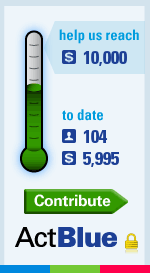
1) Help the One Kalamazoo campaign raise a final $10,000 specifically dedicated to fight back against the lies on the local TV and radio airwaves and fully fund the campaign's final field and GOTV efforts.
Give here: http://www.actblue.com/page/3-2-1-countdown
2) If you live nearby and can physically volunteer in Kalamazoo sign up here. If you know anyone that lives in Kalamazoo, use the One Kalamazoo campaign's online canvass tool to remind those voters that they need to vote on November 3rd and vote YES on Ordinance 1856 to support equality for gay and transgender people.
Contact voters: http://www.onekalamazoo.com/tellfriends2
Hate Crimes Bill Becomes a Law Today with President's Signature
Today, the Matthew Shepard and James Byrd Jr. Hate Crimes Prevention Act will become the first federal law to protect transgender people with President Barack Obama’s signature. NCTE’s Executive Director, Mara Keisling commented on NPR this morning, "It's the first time that transgender people will be in federal code in a positive way. That's a really important historical moment for the country—certainly for transgender people, but really also for the country," she says. Mara will be present at the White House to commemorate this historic moment this afternoon.
Here’s how you can participate:
- We’ll be bringing you news along the way as this historic day unfolds. Follow us @MaraKeisling and @TransEquality on Twitter for up to the minute happening.
- Join us tonight for a conference call about what the hate crime bill passage means, with an update on today’s events and what legislation is next as we move forward.The call is free, but please register so we can reserve a space for you. The call is at 8 pm ET / 7 pm CT / 6 pm MT / 5 pm PT.
- Click here to listen to NPR’s story on today’s developments.
This new law will add sexual orientation, gender identity, gender and disability to the categories included in existing federal hate crimes law and will allow local governments who are unable or unwilling to address hate crimes to receive assistance from the federal government. President Obama will sign the bill into law today.
Thursday, October 22, 2009
VICTORIES: Hate Crimes and Housing
The Senate, by a to vote, just passed the Defense Authorization Act, which includes the The Matthew Shepard and James Byrd, Jr. Hate Crimes Prevention Act, by a vote of 68 to 29. The bill now moves to President Obama's desk for his signature. Once signed, this will be the first federal law to protect transgender people. This bill marks the first positive mention of transgender people in federal law. Read NCTE's statement on the hate crimes bill.
Yesterday, the Department of Housing and Urban Development (HUD) announced proposed policies and a study that would address discrimination based on sexual orientation and gender identity. Read NCTE's statement on HUD's announcement.
Yesterday, the Department of Housing and Urban Development (HUD) announced proposed policies and a study that would address discrimination based on sexual orientation and gender identity. Read NCTE's statement on HUD's announcement.
N.Y. Court Slams Doctor’s Note Requirement for Name Change
A New York appeals court yesterday issued a two-page ruling overturning a lower court’s requirement that a transgender man present medical documentation supporting his petition for a name change. The NYC-based Transgender Legal Defense and Education Fund, which represented the petitioner, said in its press release:
[T]he appellate court wrote, "[t]here is no sound basis in law or policy to engraft upon the statutory provisions an additional requirement that a transgendered-petitioner present medical substantiation for the desired name change." The court's decision sends a powerful message that transgender people must be treated equally and that they cannot be subjected to different legal requirements than everyone else. People’s names are fundamental to their identities. This decision confirms that each one of us has the right to be known by a name we choose. That decision can’t be second-guessed by doctors, therapists or anyone else simply because someone is transgender.
Upon learning of the ruling, Olin [Winn-Ritzenberg, the petitioner,] said, "This means that I can finally change my name and move forward with my life. My gender transition has been a very personal journey, and no one is in a better position to decide that I need to change my name than I am."
…
It’s well settled in law around the country that transgender folks can follow the same simple procedures for name change as individuals who are changing their names because of marriage, religious conversion, or for any other reason. Yet, around the country, judges periodically try to make it harder for trans people than for anyone else. Despite numerous prior New York court decisions supporting the right of transgender individuals to change names without meeting any special requirements, this particular lower court had been imposing the “doctor’s note” requirement routinely on transgender individuals. While most individuals were able to comply, TLDEF appealed in this case to get rid of this requirement once and for all. Kudos to them, and to the numerous other lawyers who assisted in this appeal, including Lambda Legal.
The terse decision concludes with the unnecessary statement, which has somehow become boilerplate for New York courts, that the grant of a name change is not legal proof of change of gender.
Subscribe to:
Posts (Atom)





